The Other Shore & Coming Home

I’m writing this post from Saanich inlet, a place that’s in many of my stories, whether I name it or not. We’ve moved back to the west coast, and it’s strange how quickly Ontario has fallen away from me. We’ve been here a little more than a month, and in that time I’ve had moments of uncanny recognition, so intense they’re almost painful: in the drizzle, eating a spartan from the tree by the door while smoke from the chimney drifts down; low tide in the rain; cedar sawdust from the planer in my hair and eyes and down the back of my shirt (and in my socks); blackberries in sunshine; arbutus bark curling down to the forest floor; rain on the roof and waves on the gravel below the bedroom window.

Most of the stories I have written in the last ten years have been about exile and distance and leaving places behind. I wonder what I’ll write now that I’ve come back?

And in a nice synchronicty, my first collection of short stories is forthcoming from Stelliform Press. It was a struggle to select which stories, to find some kind of through-line across genres and eras. It starts in the past and ends in the future, and each story touches upon the place where I’m writing this: the north Pacific coast of North America. The Salish Sea. Home.
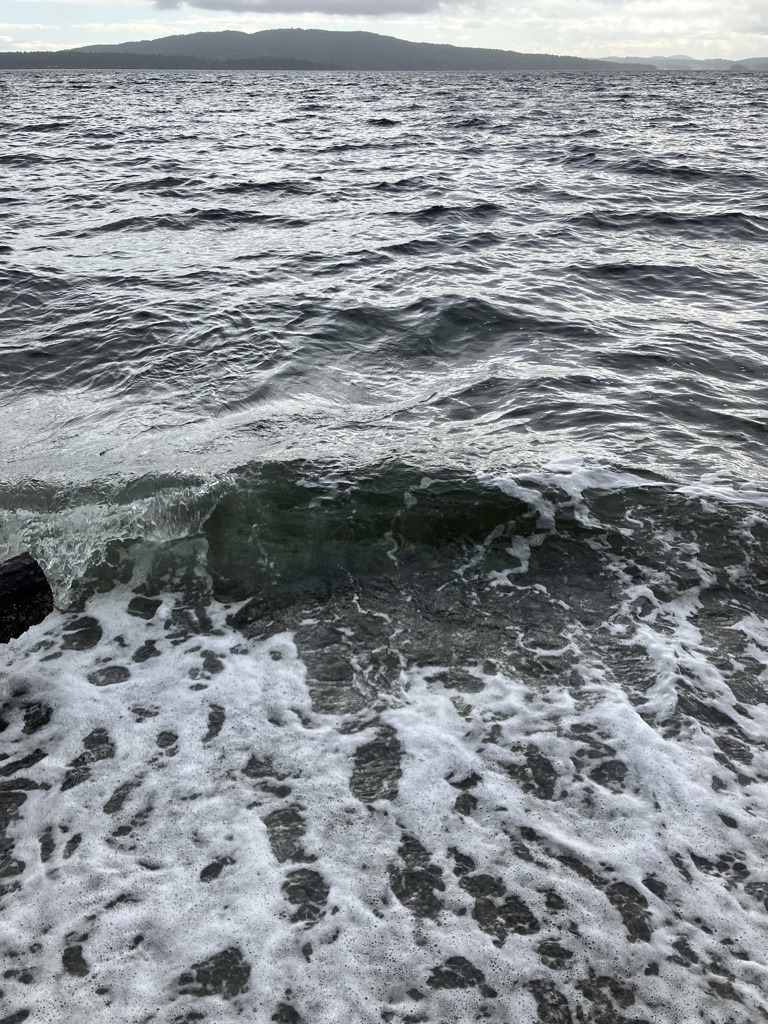
I keep taking pictures of beaches. I can’t help it. It’s in my nature.

Shadows & Tall Trees 8

I have long admired Undertow Publications. They’re a small Canadian press that publishes beautiful books in that narrow category of literary-weird-horror. It’s the same country as Daphne du Maurier, Robert Aickman, and Alberto Manguel’s Black Water anthologies: precise, elegant, and uncomfortable. I particularly recommend Aickman’s Heirs which contains “The Underground Economy” a story that will scare you in a deep and absurd way. They also have a regular anthology series called Shadows & Tall Trees, and I’m pleased that it includes one of my stories, “Child of Shower and Gleam.” It’s about pregnancy, motherhood, and childbirth, so part of the same family as “Uterus Abscondita” in Shimmer, and “The Fourth Trimester is the Strangest” in F&SF. It’s darker than those, I think, not about the terror & hope of transformation, but a changeling story, a story about vulnerability in the everyday world.

When we moved to this neighbourhood– shortly before our son was born– I liked how busy it was, mostly with students, but also with kids. They traveled in packs on bikes and scooters, shouting up and down the street to the park at the end with the swimming pool, draped in beach towels, with the occasional supervising adult or older sister. There were a few children, though, who seemed out of step with the others, a little behind the group, more often alone, and never accompanied by adults. Sometimes they knocked on our door, asking for treats and glasses of water and just for the attention of a friendly adult who would listen to their strange stories and watch their somersaults. Sometimes I had the time. More often I did not, with a baby and a wholly transformed life to figure out.

Then– as is often the case in a neighbourhood full of rental houses– they were gone. I still think about them.